
Fridge Not Cooling in London?

If your fridge is running but not getting cold, food is spoiling too quickly, or the freezer works while the fridge compartment stays warm, this guide explains the most common causes and when to book a professional fridge repair in London.

Warm fridge

Poor cooling and uneven temperature checks.

Fridge freezer faults

Airflow, fan, sensor and defrost issues.

London coverage

Support across many London postcodes.

Before you book

Seven common reasons your fridge is not cooling

A fridge that is not cooling properly does not always mean the appliance has failed completely. Sometimes the issue is a simple temperature setting, blocked airflow, dirty condenser coils or a weak door seal. In other cases, the problem may involve the fan, control board, relay, compressor or refrigerant system.


This page explains the checks you can safely do at home before booking a visit. If the fridge still will not cool after these steps, you can book our fridge service or compare related help on our fridge freezer repair page.


We also support appliance repairs by area and brand, so this guide includes useful links to our London service areas and appliance brand repair pages.

What to check when your fridge is running but not cooling

Start with the simple checks first. They can save time, avoid unnecessary call-outs and help the engineer understand the fault more quickly if a repair is needed.

1. The temperature is set too high

Check the thermostat or digital display first. A fridge compartment is usually best kept around 3°C to 5°C, while a freezer should normally sit around -18°C. If the control has been knocked or the display is showing the wrong setting, the fridge may run without reaching the correct temperature.
2. Cold air vents are blocked

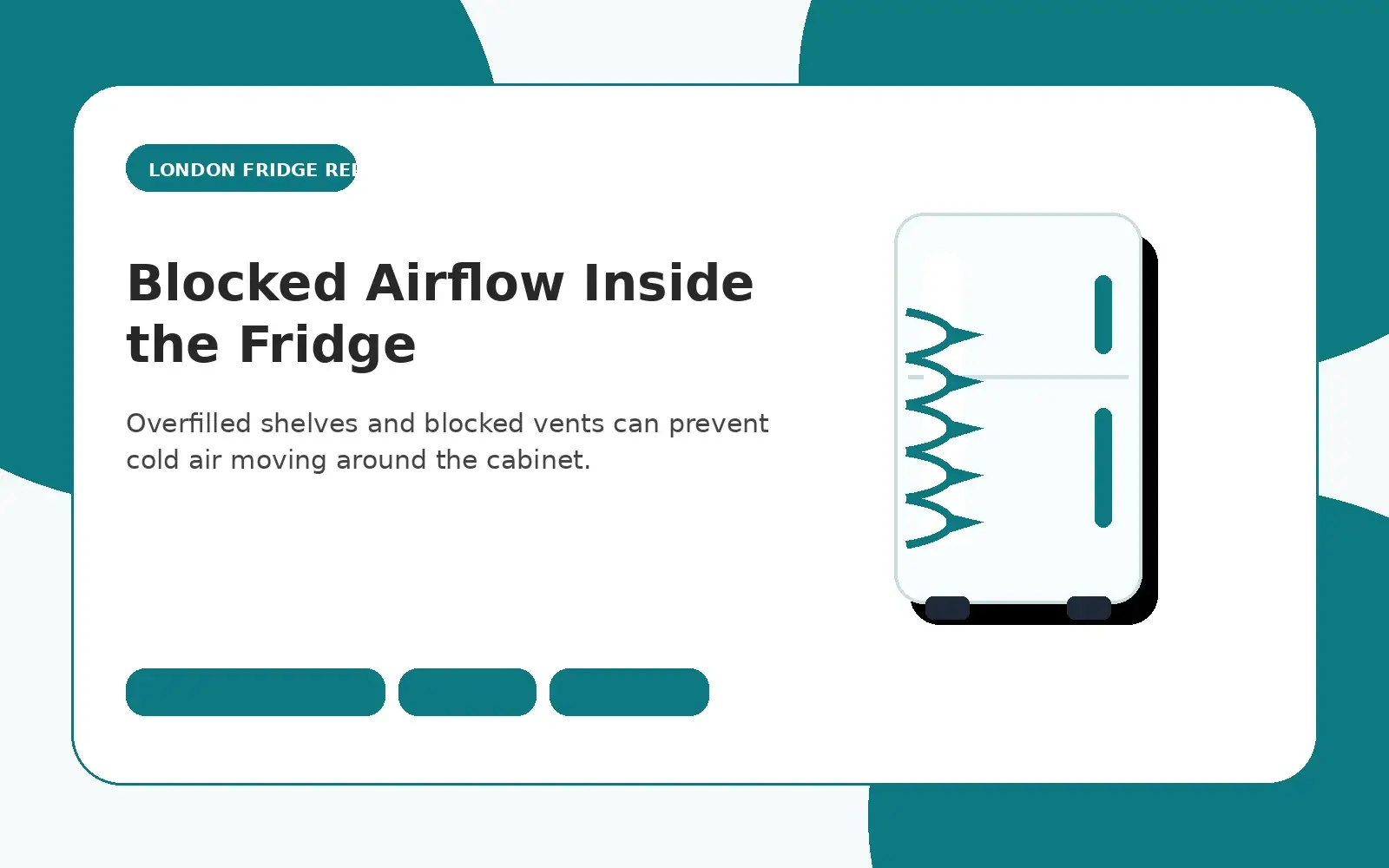
Cold air needs space to circulate. If food boxes, bottles or containers are pushed against the rear vents, the top shelf may feel cold while other areas stay warm. Leave space around the vents and avoid overfilling the fridge compartment.

3. The condenser coils are dusty

Condenser coils release heat from the appliance. When they are covered with dust or pet hair, the fridge has to work harder and may lose cooling performance. If accessible, clean the coils gently with a soft brush or vacuum attachment after switching the appliance off.
4. The door seal is weak or damaged

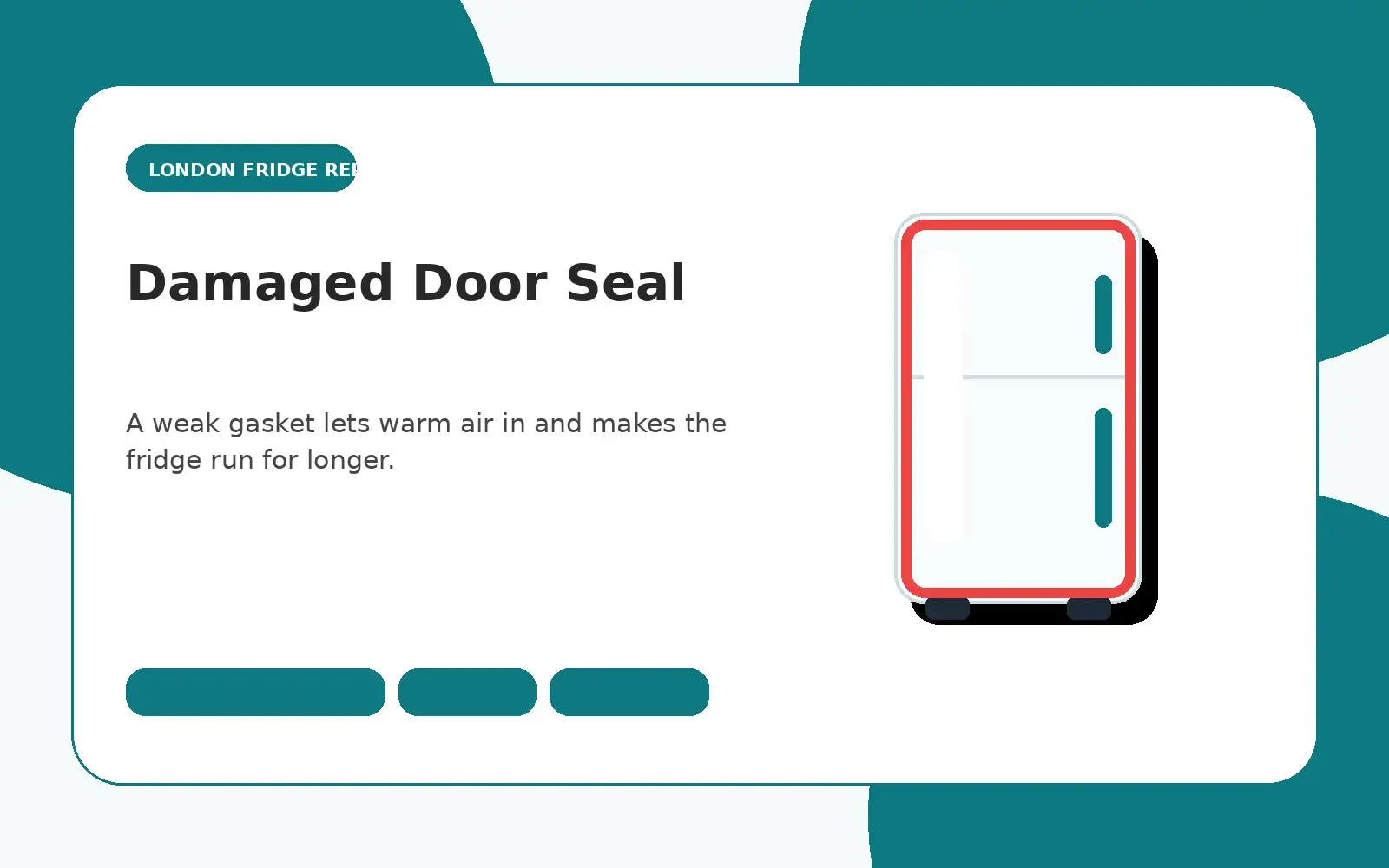
A loose, split or dirty door gasket lets warm air into the cabinet. Try the paper test: close the door on a sheet of paper and gently pull it. If it slides out with no resistance, the seal may not be gripping properly.

5. The control board needs a safe reset

Some electronic control faults can settle after a safe reset. Switch the fridge off at the socket for around five minutes, then switch it back on and avoid opening the door repeatedly for several hours while the temperature stabilises.
6. The compressor or start relay is faulty

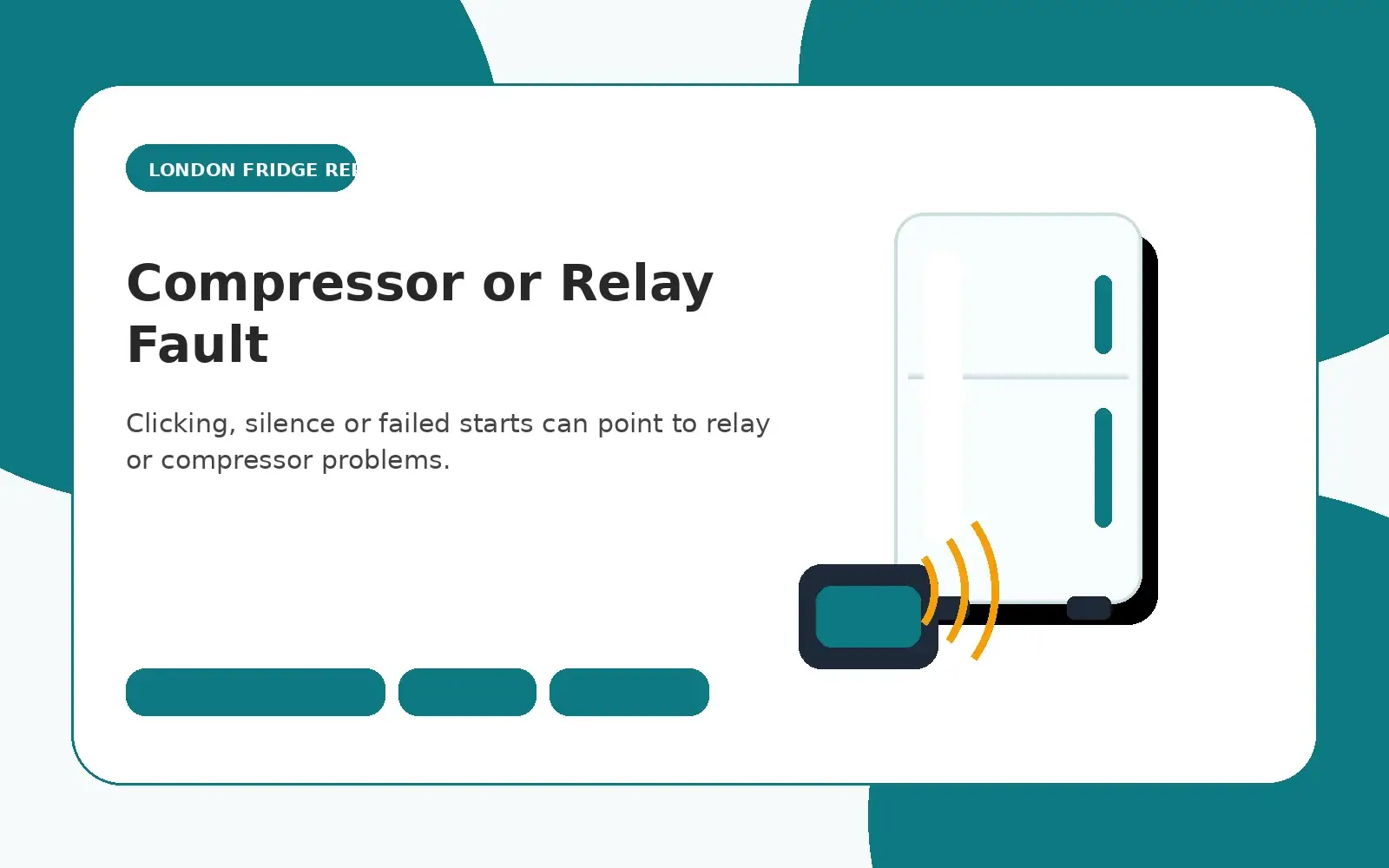
A healthy compressor often makes a low, steady hum. Repeated clicking, silence, overheating or short running cycles can point to a relay, capacitor or compressor fault. This is not a safe DIY repair and should be checked by a qualified appliance engineer.
7. There may be a refrigerant leak

If all the simple checks look fine but the fridge still does not cool, the refrigerant circuit may need specialist testing. Refrigerant leaks must be diagnosed with the correct tools and should only be handled by a trained technician.

Still not cooling after these checks?

If the fridge is still warm, the issue may involve a fan motor, thermostat, sensor, PCB, compressor, relay or sealed system fault. You can book a visit and tell us which checks you have already tried.

Local fridge cooling fault repairs

Cooling faults can affect most fridge brands and models. We help customers across London, including North London locations such as N22 Wood GreenN3 FinchleyN1 Islington, Camden, Holloway Road and nearby areas listed on our covered areas page.

Wrong temperature setting

Check the thermostat or digital temperature display first.

Blocked airflow

Clear vents and avoid overfilling shelves.

Dirty coils

Dust makes heat release harder and reduces efficiency.

Weak door seal

Warm air entering the cabinet can stop stable cooling.

Compressor or relay fault

Clicking, silence or overheating needs diagnosis.

Refrigerant issue

Leak tracing and sealed system checks require specialist tools.

Main causes of a fridge not cooling

Fridge not cooling FAQs

Common causes include blocked airflow, dirty condenser coils, a faulty fan, thermostat issue, weak door seal, compressor relay fault or refrigerant problem.

This often points to poor airflow between the freezer and fridge compartment, ice build-up around the evaporator, an evaporator fan problem or a defrost system fault.

You can safely check the temperature setting, airflow, door seal and accessible dust build-up. Compressor, electrical and refrigerant faults should be handled by a qualified technician.

If the appliance is overheating, tripping electricity, making a severe noise or smelling of burning, switch it off and book an inspection. For normal poor cooling, note the symptoms before contacting an engineer.

Book a repair

Need fridge not cooling repair in London?

Tell us what you have checked, your fridge brand and your London area. We can help arrange the next suitable repair step.