
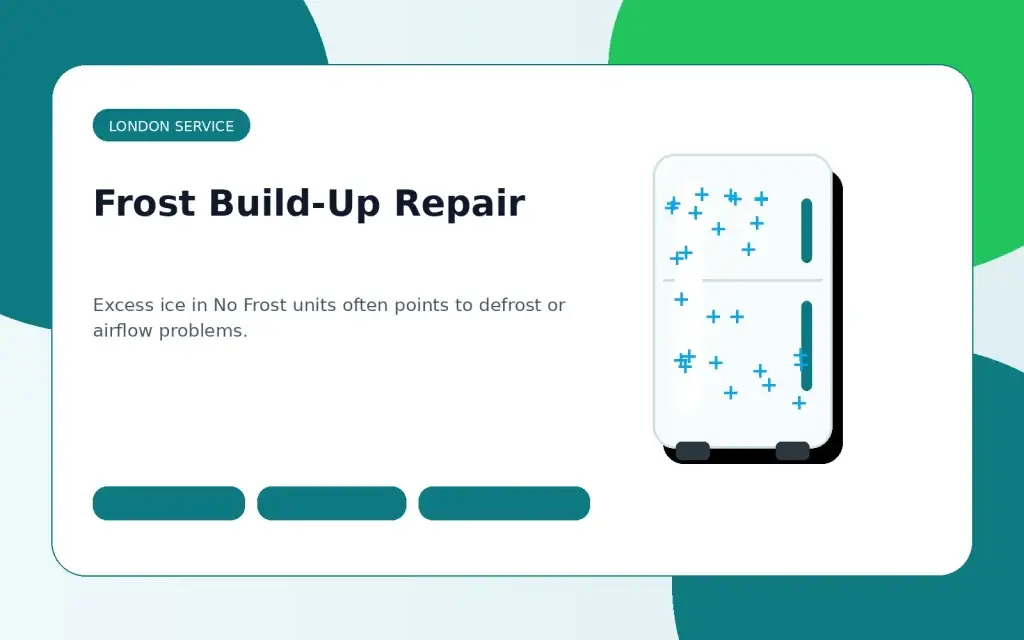
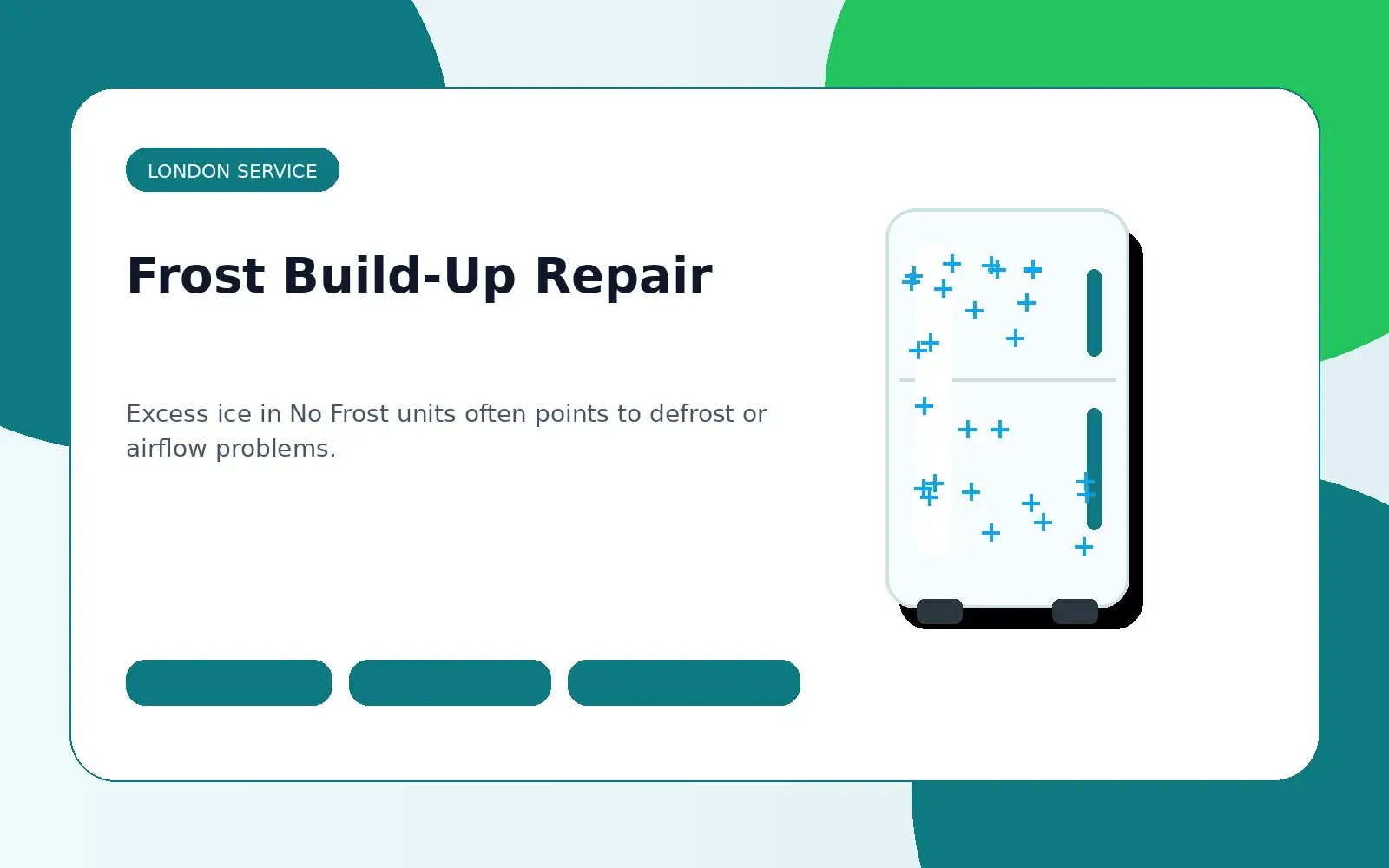
Fridge Frost Build-Up Repair in London

If thick ice is forming inside your fridge freezer, the drawers are difficult to open, the inner back wall is covered in frost, or the appliance is running but not cooling properly, the fault may be linked to the defrost system, fan, temperature sensor, door seal, drain channel or incorrect temperature settings. London Appliance Repair provides specialist fridge frost build-up repair in London.


Defrost system checks

Defrost heater, sensor, timer and control board issues can be checked where required.

No Frost models

Frost behind the inner wall, blocked airflow and weak cooling can be inspected.

London service

Fridge freezer frost repair support across many areas of London.

Frost and ice build-up problem

Why Is Your Fridge Freezer Building Up Frost?

Frost or excess ice inside a fridge freezer is usually a sign of a problem with airflow, the defrost system, door sealing or temperature control. If ignored, it can lead to weak cooling, a continuously running compressor, stuck drawers, water leaks and higher electricity use.


In No Frost fridge freezers, thick ice behind the inner back wall is not usually normal. It may be caused by a faulty defrost heater, temperature sensor, fan, timer, control board or blocked drain channel.


This page explains the most common reasons for freezer frost build-up and excess ice in a fridge freezer, so you can understand what may be simple and when it is better to contact a fridge repair specialist in London.

7 Common Reasons for Frost Build-Up or Excess Ice

Excess frost does not always mean the whole appliance has failed. Sometimes the issue is caused by temperature settings or food blocking airflow, but in more serious cases the defrost system, temperature sensor, fan or cooling circuit may need to be checked.

1. The defrost system is not working properly

The defrost system is designed to melt ice from the evaporator at the right time. If the heater, timer, sensor or control board does not operate correctly, the ice can become thicker day by day and eventually block the airflow.
2. The freezer temperature sensor is faulty

The temperature sensor sends freezer temperature readings to the control board. If the sensor gives incorrect readings, the appliance may run for too long and excess cold can cause thick layers of ice to form.
3. The freezer door seal is damaged

If the freezer door does not close properly or the seal is split, loose or worn, warm humid air can enter the appliance. This moisture freezes on cold surfaces and gradually creates a thick layer of ice.
4. The cold air vents or airflow path are blocked

If air vents are blocked by ice or food items, cold air cannot circulate properly. This can leave the fridge section too warm, the freezer too cold, and more ice forming behind the inner wall.
5. The refrigerant pressure or cooling circuit has a problem

If the cooling circuit is not operating correctly, the evaporator may become too cold or the appliance may cool unevenly. In some cases, ice can form on the coils while other parts of the appliance do not cool properly.
6. The defrost drain is blocked

Water from the defrost process should leave through the drain channel. If this path is blocked, water can collect around the evaporator or at the bottom of the freezer and freeze again. This may also appear together with water leaks.
7. The freezer temperature is set too low

A suitable freezer temperature is usually around -18°C. If the temperature is set much lower, the compressor may run for longer and thin layers of frost can gradually become thick ice.

Check the freezer temperature

Make sure the freezer is set to a suitable temperature and is not set colder than necessary.

Check the door and seal

If the door does not close properly or the seal is damaged, humid air can enter the freezer.

Keep air vents clear

Food items should not block cold air vents or the internal airflow path.

Take back-wall ice seriously

Thick ice behind the inner back wall often points to a defrost, fan or drain issue.

What Should You Check Before Calling a Fridge Engineer?

Some causes of frost build-up can be checked with simple steps. However, if thick ice is forming behind the inner back wall, the freezer is warming up or the appliance runs continuously, avoid dismantling internal parts. A screwdriver and misplaced confidence rarely improve a fridge freezer, because apparently appliances also enjoy making things expensive.


Frost keeps returning

If ice forms again after cleaning, the real cause needs to be checked.

Cooling is affected

If frost appears with weak cooling or poor freezer performance, specialist inspection is needed.

When Should You Contact a Fridge Repair Specialist?

If thick ice forms behind the inner back wall, the fridge or freezer is not cooling properly, the compressor runs continuously, drawers are stuck because of ice, or frost returns after cleaning, the appliance should be inspected by a technician.

Ongoing frost build-up can block airflow and put extra strain on parts such as the fan, evaporator, defrost heater and control board. If the problem keeps returning, book a fridge frost build-up repair in London.

Fridge Problems Related to Frost Build-Up

Frost build-up or excess ice may appear together with poor cooling, water leaks, loud noise or a fridge that runs continuously. These related pages can help you understand the fault more clearly.

FAQs About Fridge Freezer Frost Build-Up

Excess frost can be caused by a defrost system fault, damaged door seal, faulty temperature sensor, blocked air vents or incorrect temperature settings.

Thick ice in a No Frost model is usually not normal and can point to a defrost, fan, sensor or drain issue.

Ice behind the inner back wall is often linked to a defrost fault, airflow problem or excess moisture inside the freezer.

Yes. Warm humid air entering through a damaged door seal can turn into moisture and then freeze on cold internal surfaces.

If frost keeps returning, thick ice forms behind the inner wall, the freezer does not work properly, or frost appears together with water leaks and weak cooling, it is best to have the appliance inspected.

Book a Repair

Is Your Fridge Freezer Still Building Up Frost?

If thick ice is forming inside the freezer, drawers are getting stuck, frost returns after cleaning, or the appliance has weak cooling and water leaks, submit your request and the London Appliance Repair team will help arrange the next step.