



Are your clothes still damp after a full cycle? Does your dryer take hours to finish, or are your energy bills creeping up? A blocked condenser is one of the most common causes, and it is something you can usually clean at home in about 15 minutes.
This guide explains what the condenser does, how to clean it step by step and what to do if the dryer still does not work properly afterwards.
Switch the dryer off and unplug it, open the flap at the bottom front, release the catches and slide the condenser out. Rinse it under lukewarm running water until the water runs clear, let it drain and dry fully, then refit it and lock it in place. Do this about once a month, or more often if you dry a lot. Always check your manual first, because some dryers do not have a removable condenser.
Why Does the Condenser Need Cleaning?
Condenser dryers do not need an outside vent. Instead, the warm, damp air passes through a heat exchanger, called the condenser, which cools the air so the moisture turns into water. The water collects in a tank or drains away.
The condenser has thin metal fins with tiny gaps. Over time, fine fluff, dust and detergent residue build up between them. When the gaps are blocked, air cannot flow properly. This causes longer drying times, higher energy use and a machine that runs hotter than it should. In some cases, the heater can overheat and trip a safety device, so the dryer stops heating. Lint is also flammable, so keeping the airflow clear reduces the risk of a fire.
Before You Start: Check Your Dryer Type
Not every dryer is the same. Many standard condenser dryers have a removable condenser at the bottom front. But some washer dryers and many heat pump dryers have a heat exchanger that is not designed to be taken out and rinsed, and some have a filter that you clean by hand or with a vacuum instead. Check your manual or the manufacturer’s instructions first, and follow the steps for your model.
How to Clean a Tumble Dryer Condenser, Step by Step
Step 1: Switch Off and Unplug
Safety comes first. Switch the dryer off at the wall socket and unplug it, holding the plug itself, not the cable. Put an old towel on the floor in front of the machine, because some water will drip when you take the condenser out.
Step 2: Remove the Condenser
Look at the bottom front of the dryer for a small flap or cover, and open it. You will see the condenser, which looks like a plastic box with thin metal fins inside. Release the locking catches or levers, hold the handle and slide it straight out. It can be heavy and may contain a little water, so hold it level.
Step 3: Rinse With Lukewarm Water
Take the condenser to the sink or bath. Rinse it under lukewarm running water, running the water through it in the opposite direction to the airflow, so the fluff comes out the way it went in. Grey water will come out, which is the lint and detergent residue. Keep rinsing until the water runs clear.
Do not use boiling or very hot water, because it can warp the plastic. Do not use high-pressure water, stiff brushes or sharp tools, because the metal fins are thin and bend easily, and a damaged condenser may need to be replaced.
If there is stubborn limescale, which is common in London’s hard water, soak the condenser in a mix of warm water and white vinegar for about 20 minutes, if your manual allows it, then rinse well.
Step 4: Clean the Slot and the Lint Filter
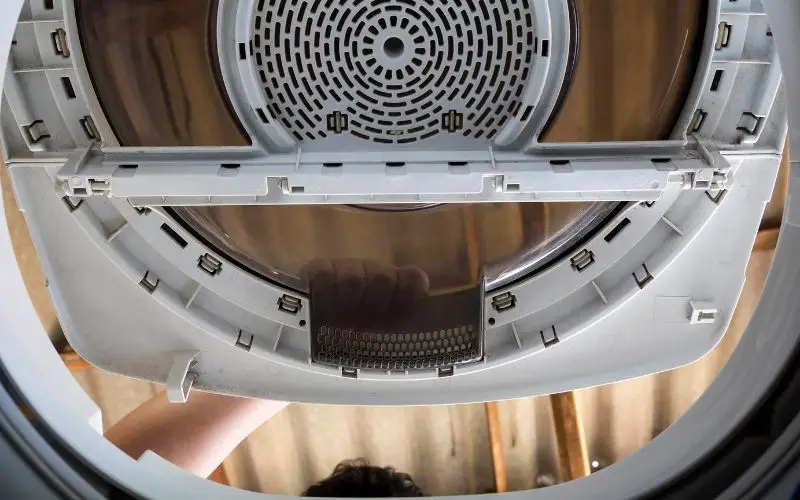
While the condenser is out, use a vacuum cleaner with a nozzle to remove dust from the slot it sits in, and wipe around the seals with a damp cloth. Then take out the lint filter from the door opening, and remove the fluff. Wash it in warm, soapy water, and let it dry fully before you put it back. If you see a filter warning on the display even after cleaning, our guide on why your tumble dryer shows a filter warning light explains the other possible causes.
Step 5: Dry and Refit Everything
Let the condenser drain and dry fully on a towel. A wet condenser can cause damp problems or sensor faults. Slide it back into the slot, lock the catches, close the flap and plug the dryer back in. Run a short test cycle to check that everything works.
How Often Should You Do It?
About once a month is a good guide, if you use the dryer a few times a week. If you dry clothes every day, have pets or often dry towels and bedding, clean it every two weeks. Always empty the water tank after each load, and clean the lint filter after every cycle.
Warning Signs You Should Not Ignore
Do not wait for your next scheduled clean if you notice any of these. Towels are still damp after a full cycle. The outside of the dryer is very hot. There is a burning smell. A warning light comes on. The cycle takes much longer than it used to.
If you smell burning: Stop the cycle, switch the dryer off at the wall socket, keep the door closed and do not restart it. If you see smoke or flames, leave the room and call 999.
When to Call an Engineer
Some problems cannot be fixed by cleaning. Call an engineer if your dryer spins but does not heat, the drum does not turn, the pump makes a grinding noise, it trips your fuse box when you switch it on or the condenser or its frame is cracked or damaged. Our guide on why your tumble dryer is not heating explains the common causes, but internal parts and wiring should only be handled by a trained engineer, as dryers use mains electricity.
Frequently Asked Questions
How often should I clean my condenser?
About once a month, or every two weeks if you dry clothes daily or have pets. Check your manual for your model.
Can I put the condenser in the dishwasher?
No. The heat and detergent can warp the plastic and damage the fins. Rinse it by hand under lukewarm water.
Why does my dryer smell bad?
It is usually caused by damp lint in the condenser, filter or drum. Clean those parts, wipe the drum and leave the door open after use, so air can circulate.
Will a dirty condenser increase my energy bills?
It can. Blocked airflow makes the dryer run for longer to dry the same load, which uses more electricity.
Can I use the dryer without the condenser?
No. Without it, the machine cannot cool and collect the damp air properly, and it can overheat and be damaged.
Need Help With a Dryer That Is Still Not Drying?
If you have cleaned the condenser and the filter, and the dryer still takes too long, blows cold air or shows an error code, a part may be faulty. Our trained and insured engineers cover all London boroughs and work on Bosch, Beko, Hotpoint, Indesit, Samsung and other major brands, with a guarantee on parts and labour.
Book a visit for Tumble Dryer Repair in London and get honest advice and clear pricing. Contact London Appliance Repair now.