

Does your washing machine leave your clothes wet? Can water be left to collect in the drum after washing? Is your machine smelly?
This is frequently caused by a blocked filter. Learning how to clean a washing machine filter properly is very easy. It prevents odours and ensures that your machine remains in action as if new. It can also keep you from spending a lot on repair costs.
This expertly created guide for London was created for you. We’ll guide you on how to locate, clean and repair your filter properly.
What Does a Washing Machine Filter Do?
The filter will safeguard your machine. It’s located in front of the drain pump on the bottom.
Its job is simple:
- Prevents the escape of small parts into the pump.
- It prevents coins, keys and buttons from damaging the impeller of the pump.
- It collects pet hair, lint and tissue paper.
- Allows for rapid drainage of water at the end of a cycle.
When it becomes full, water cannot drain out of the filter. Dirty water continues to remain in the drum. This is a stress on the motor and pump.
Warning Signs Your Filter Needs Cleaning
Filter cleaning should take place every 1-3 months. If washing pet bedding or heavy wool items, clean it more frequently.
Check for the following signs:
- At the end of the last spin, clothes are dripping wet.
- At the end of the cycle, water remains in the drum.
- The machine makes a loud humming noise while draining.
- The drum gives off a stale, musty smell.
- The wash cycle is very long.
Step By Step: How to Clean a Washing Machine Filter Properly
Here are some easy steps to follow. This guide is applicable to front-loaders from Bosch, Samsung, Beko, Hotpoint and Indesit.
Tools You Will Need
- Two old towels
- A flat bottom baking pan or tray.
- An old toothbrush
- A small bowl
Step 1: Turn Off the Power
Safety comes first. Unplug the machine from the wall socket. Disconnect the power cord.
Note: Do not touch the machine’s inner parts when it is plugged in. Water and electricity are hazardous. Always unplug the power cable first.
Step 2: Locate the Filter Panel
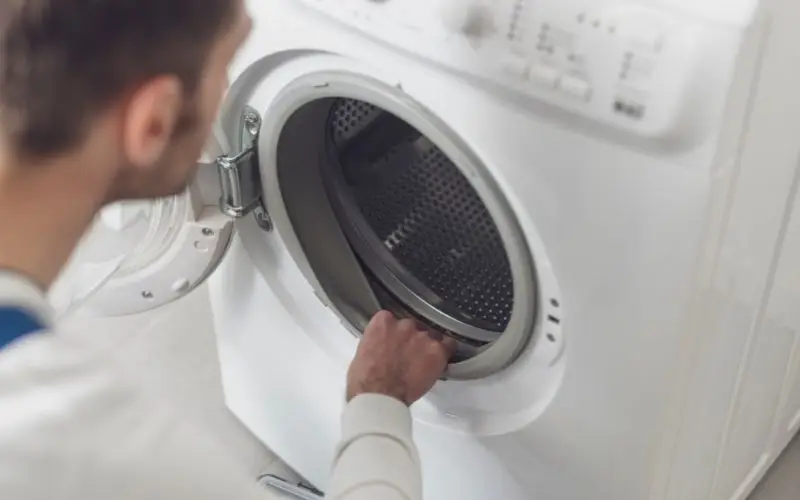
Check the bottom front of the machine. There is a small door or flap that you will see.
- Bosch and Siemens: The flap is at the bottom right.
- Samsung: The door is on the bottom right or left.
- Beko and Indesit: The panel is in the bottom right corner.
- Hotpoint: The cover is located behind a plastic strip at the bottom.
Use fingers or a flat implement to open the flap.
Step 3: Prepare for Water Spills
When the filter cap is removed, water will flow. This is normal.
- Place towels on the floor underneath the door.
- Put your shallow tray on top of the cap.
- Some Bosch and Samsung models will have a little drainage tube adjacent to the cap. Pull the tube out. Take out the small plug. First, drain water into your bowl.
Step 4: Unscrew and Remove the Filter
Hold the filter cap securely. Rotate slowly to the left (anti-clockwise).
- Water will be drained out into your tray. If it becomes full, tip the tray into your sink.
- Continue turning until the cap separates.
- Draw the filter directly towards you.
Do not use pliers to remove the cap if it has stuck. The plastic can be broken with pliers. If the filter is stuck, it’s either a hard water scale or a coin is stuck inside.
Step 5: Clean the Filter Unit
Take the filter to your sink.
- Use the hand technique to remove coins, hair and tissue.
- Rinse the filter with warm tap water.
- Scrub away dirt and soap scum with your toothbrush.
- Examine the rubber seal ring. Be sure it is not cracked or worn.
Step 6: Clean Inside the Housing
Look inside the filter hole with a torch. The small fan blades of the drain pump will be visible.
- Pull out any hair or thread wrapped around the fan blades.
- Gently rotate the fan with your finger. It should rotate freely.
- Avoid inserting sharp metal objects into the hole.
Step 7: Reinsert the Filter
- Put the clean filter in the filter slot.
- Rotate it to the right (clockwise) until it is tight.
- It should not be over-tightened; otherwise the plastic will crack.
- Push the drain hose plug back in close the outer door flap.
Step 8: Test for Leaks
Connect the machine back to the power socket, short rinse and spin. Check for leaks in the flap area. If you notice water drops, then close the cap slightly further.
Filter Tips for Popular UK Washing Machine Brands
The water is very hard in London. Filter and pipe formation of limescale is rapid. Below are some ideas to help you identify the best brands in the UK.
Bosch Machines
The turn-key cost of the Bosch caps is quite high. If error E18 does not go away after cleaning, inspect the drain hose for kinks behind the machine.
Samsung Machines
The filter slot of Samsung EcoBubble models is deep. Please remove any lint from the back of the chamber for code 5E.
Hotpoint and Indesit Machines
Hotpoint panels may have a certain firmness. Gently clip off the bottom cover. Check for trapped coins and clear F05.
Beko Machines
Beko filter caps turn very smoothly. If you use your machine every day, clean the filter twice a month.
When to Call a London Repair Engineer
A filter clean fixes most drain issues. But if the problem continues, it is safer to book professional Washing Machine Repair in London instead of risking further damage to the pump or motor.
- The filter cap is completely frozen and will not open.
- Water stays in the drum even after the filter is clean.
- The drain pump makes a harsh grinding noise.
- The machine trips your home fuse box.
- You see leaks coming from under the middle of the unit.
Safety Warning: Do not try to repair inner electrical parts like the thermostat, thermal fuse, or pump motor yourself. Leave live wire repairs to trained experts.
How to Prevent Filter Blockages
Follow these quick habits to keep your filter clear:
- Check all pockets: Take out coins, clips, and tissue before washing.
- Use wash bags: Put small baby socks and delicates in mesh wash bags.
- Run a hot wash: Run an empty 90°C cycle once a month with a machine cleaner. This melts grease and soap scum.
- Clean the door seal: Wipe out the rubber door gasket after every wash.
Frequently Asked Questions
Can I run my machine without a filter?
No. Water will flood your floor right away. Debris will also break the drain pump motor.
Why does my washing machine smell bad after cleaning the filter?
Smells also build up under the rubber door seal and detergent drawer. Wipe the rubber seal with warm water and vinegar.
What if my filter cap will not turn?
Do not force it with heavy tools. You might break the pump housing. An engineer can safely remove jammed coins from behind the pump.
How often should I clean the filter?
Clean it once every month for best results. Clean it twice a month if you have pets.
Book an Expert Appliance Repair in London
Is your washing machine still not draining properly? Do you need fast, local help?
Our team of experienced engineers is ready to help across all London areas. We fix all major brands using genuine spare parts. We replace broken pumps, seals, hoses, and electronic parts safely.
If you need fast help, book an engineer at london appliance repair. Contact us for reliable, quick, and friendly service at your home.