


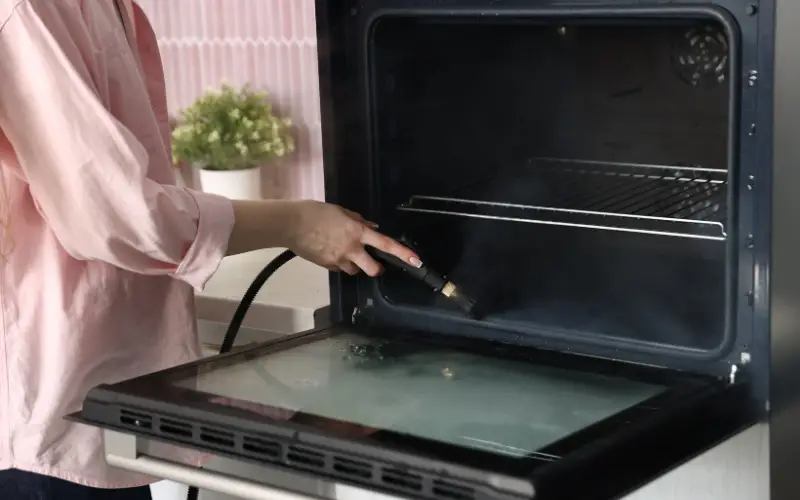
Does your oven smoke when you switch it on? Is there burnt grease on the metal bar at the top or bottom? Knowing how to clean an oven heating element safely can help reduce smoke and bad smells.
When grease splashes onto a hot element, it can turn into hard black residue. This burns and smokes every time the oven heats up, and it can affect the taste of your food. Heavy build-up can also make the oven heat less evenly.
This simple guide was written by our London repair engineers. It explains how the heating element works, how to clean it with a gentle method and how to tell whether it is dirty or actually faulty.
Important: Always check your oven manual first. Some manufacturers advise against cleaning the element at all, and some elements are hidden under a cover. If the manual says not to clean it, follow that advice.
What is an Oven Heating Element?
The heating element is the thick metal bar inside your oven. Most electric ovens have two:
- Top element: Often also works as the grill.
- Bottom element: Sits at the base of the oven, sometimes hidden under a plate, and helps with baking.
When you turn on the oven, electricity passes through the element, and the metal heats up and glows red. Over time, fat and food splashes land on it and bake onto the surface.
3 Reasons to Keep the Element Clean
1. Less Smoke
Burnt grease on a hot element makes smoke. This can fill your kitchen and set off the smoke alarm.
2. Better-Tasting Food
Smoke and burnt residue can affect the flavour of your food. A cleaner oven gives fresher results.
3. Lower Fire Risk
Built-up grease can catch fire if it gets hot enough. Keeping the oven clean reduces this risk.
What You Need
You do not need strong chemicals. Harsh sprays can damage the element’s surface.
- Warm water
- Bicarbonate of soda (baking soda)
- A soft microfibre cloth
- A soft sponge
- Rubber gloves
- An old towel
How to Clean an Oven Heating Element Safely
Step 1: Turn Off the Power
Safety comes first. Many UK ovens are connected to a cooker switch or the fuse box rather than a plug. Switch the oven off at the cooker switch or fuse box. If it has a plug, unplug it from the wall socket.
Safety warning: Never touch electrical connectors or open electrical panels. Water and electricity are dangerous together. Contact a qualified professional for any electrical work.
Step 2: Let the Oven Cool Down
Never touch a hot element. Leave the oven to cool for at least two hours after use, until the metal is cold.
Step 3: Brush Away Loose Food
Place an old towel at the bottom of the oven to catch crumbs. Gently wipe the element with a dry cloth to remove loose food. Never pull or bend the element.
Step 4: Apply a Baking Soda Paste
- Mix three parts bicarbonate of soda with one part water to make a thick paste.
- Wearing gloves, gently spread a small amount onto the dirty parts of the element.
- Keep the paste away from the electrical connections at the back.
Step 5: Wipe Away the Dirt
Leave the paste for about 20 minutes to soften the grease. Then wipe it off with a damp microfibre cloth. Do not use wire pads or abrasive scourers.
Step 6: Dry Everything Fully
Dry the element with a clean towel. Leave the oven door open for about an hour before switching the power back on, so every part is fully dry.
Common Mistakes That Can Damage the Element
Avoid these four mistakes:
- Using oven spray on the element: Strong sprays can damage the surface. Check your manual first.
- Using steel wool: It can scratch the surface and leave metal fragments.
- Bending the element: This can break the wire inside.
- Getting water near the connections: Moisture around the electrical contacts can cause a short circuit and may trip your fuse box.
How to Tell If the Element is Dirty or Faulty
A dirty element can look similar to a broken one. Look out for these signs of a fault:
- Cracks, holes or blisters: The metal is visibly damaged.
- Bright spots: One area glows much brighter than the rest.
- No heat: The fan runs, but the element stays cold.
- Tripped fuse box: The power cuts out as soon as the oven switches on.
If you see any of these, do not use the oven. A faulty element needs replacing by an engineer.
Some ovens also show an error code for heating faults. Codes vary by brand and model, so check your oven manual to see what yours means.
Other Problems a Dirty Element Can Cause
Heavy grease can cause hot spots and smoke, and a damaged element can lead to uneven cooking. If your food is cooking unevenly, read our guide on why your oven is not heating evenly.
When Should You Call an Engineer?
Cleaning is an easy job. Replacing an element or testing electrical parts needs the right tools and training.
Speak to an engineer if:
- The element is cracked, blistered or bulging.
- The oven does not heat after cleaning.
- You smell burning plastic or see sparks.
- The oven trips your fuse box. Our guide on why your oven keeps tripping the fuse explains the common causes.
- An error code stays on the screen.
Frequently Asked Questions
Can I use my oven straight after cleaning?
No. Wait at least an hour so the element and connections are fully dry.
Why is my oven smoking after I cleaned it?
A little light smoke is normal if some baking soda residue is left. It should burn off in a few minutes. If thick black smoke appears, switch the oven off at the cooker switch and let it cool.
How often should I clean the heating element?
Check it every few months, and wipe up heavy spills as soon as the oven has cooled. Follow your manual’s advice.
Can a dirty element cause an error code?
It can contribute to heating problems, but error codes usually point to a faulty part. Check your manual or ask an engineer.
Need Help With a Faulty Heating Element?
Is your heating element cracked, bulging or not heating? Is your oven tripping the fuse box?
Do not risk electrical faults or ruined meals. Our local engineers cover all London boroughs and can help with Bosch, Hotpoint, Beko, Samsung, Indesit, Neff and Zanussi ovens. We can replace heating elements, thermostats, timers and door seals.
If cleaning has not solved the problem, book a visit for Oven Repair in London and get clear pricing and expert help at your home. Contact our friendly team at London Appliance Repair now.