



Is the back of your fridge hot to the touch? Is the metal grid or panel warmer than you expected? Warm is normal, but very hot can be a sign of a problem. A fridge that cannot lose its heat has to work harder, uses more electricity and may struggle to keep food cold.
This guide explains how a fridge gets rid of heat, what is normal, the most common reasons for an overheating condenser and what you can safely do about it.
A fridge condenser is normally warm, because it releases heat from inside the cabinet into your kitchen. If it feels very hot, the usual causes are a thick layer of dust, no space around the fridge, a faulty fan, worn door seals or a hidden fault in the cooling system. Clean the dust, give the fridge room to breathe and check the door seals. If it is still very hot, or the fridge is not cooling, call an engineer.
How Does a Fridge Get Rid of Heat?
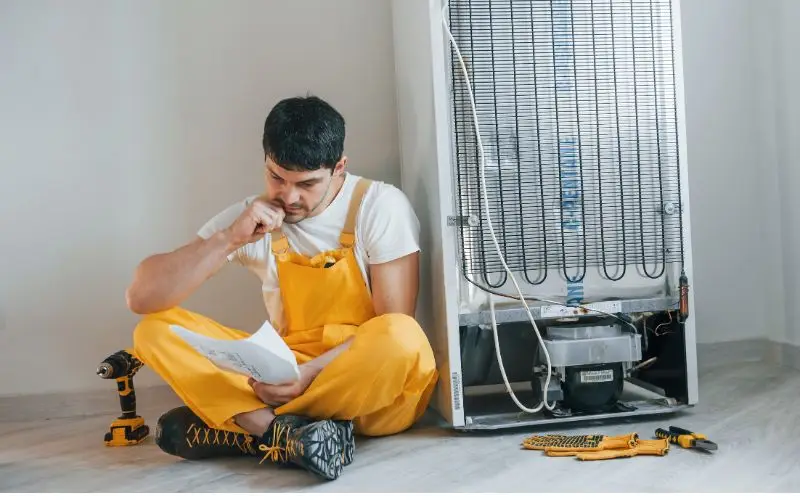
A fridge does not make cold air. It moves heat from the inside of the cabinet to the outside. A coolant, called a refrigerant, absorbs heat from the inside, and the compressor pumps it around a sealed system. As the refrigerant is compressed, it becomes hot, and it flows through the condenser, a set of pipes or a panel, usually at the back, underneath or in the side walls. The condenser releases that heat into the air in your kitchen, and the refrigerant cools and turns back into a liquid so the cycle can start again.
This means that it is normal for the back or sides of a fridge to feel warm, and for the area near the compressor to feel warmer. Many models have the condenser built into the side walls, so the sides can feel warm too. It is not normal if the surfaces are too hot to hold your hand against, or the fridge is not keeping food cold.
Why is My Fridge Condenser Getting Hot?
1. Dust and Dirt on the Condenser
On fridges with exposed coils at the back or underneath, dust, pet hair and kitchen grease build up over time. This forms an insulating layer that stops the coils from releasing heat. The compressor then runs for longer, so the heat builds up. Cleaning it is one of the easiest ways to improve how well your fridge runs.
2. No Space for Air to Circulate
Many London kitchens are small, and fridges are often pushed tight against a wall or squeezed between cabinets. A fridge needs air to flow around it, so the heat can rise and escape. If the space is too tight, the hot air stays trapped, and the surfaces get hotter. Check your manual for the clearance it recommends, as it varies by model. It is common to need a few centimetres at the back and on the sides, and more above the fridge.
3. A Faulty Condenser Fan
Some fridges have a small fan, usually near the compressor, that blows air over the condenser. If the fan stops, air does not move, and the heat builds up quickly. You may notice that the compressor area and the back panel are much hotter than usual. If your fridge is also making odd noises, our guide on why your fridge is making a buzzing or humming noise explains what is normal and what is not.
4. Worn Door Seals
The rubber seal around the door keeps cold air in. Over time, it can dry out, crack or lose its shape, and warm air gets in. The fridge then runs for longer to compensate, and the condenser stays hot for longer. You can test the seal by closing the door on a piece of paper. If the paper pulls out easily, the seal may be worn. If you also notice water inside the fridge, our guide on why your fridge is leaking water inside explains the common causes.
5. A Fault in the Cooling System
In some cases, the cause is inside the sealed cooling system, such as a blockage or a leak, or the compressor is working poorly. This is not something you can see or fix at home. Signs include a condenser that is very hot but a fridge that is not cold, or a compressor that runs constantly. Refrigerant work must be done by a qualified engineer, so do not try to open or repair any pipes.
Simple Checks You Can Do Today
Start with the easiest steps. Pull the fridge forward a little, and check that there is a gap at the back and the sides, as the manual recommends. Make sure it is not right next to the oven, a radiator or a window with strong sunlight, because heat from nearby sources makes the problem worse.
Switch the fridge off at the wall and unplug it, and then use a soft brush or a vacuum with a brush attachment to remove dust from the coils or the grille at the back or underneath. Clean gently, because the pipes are delicate. Check the door seals for cracks or gaps with the paper test.
Finally, check how full the fridge is. An overstuffed fridge can block the airflow inside, and a very warm kitchen can make the fridge work harder.
Safety First
Switch the fridge off at the wall and unplug it before you touch the back or the base. Do not cut, bend or poke the metal tubes, and do not open any panels around the compressor, because the system is sealed and under pressure, and the electrical parts can still hold a charge. Leave all refrigerant, compressor and electrical work to a qualified engineer.
If you notice a burning smell, a strong chemical smell or smoke, switch the fridge off at the wall, keep the door closed and call an engineer.
When Should You Call an Engineer?
Call an engineer if the condenser is still very hot after you have cleaned it and given the fridge more space, the fridge is not keeping food cold, the compressor runs all the time or makes a loud noise, the fridge trips your fuse box or you smell burning or a strong chemical smell. An engineer can test the fan, the compressor and the cooling system safely, and fix or replace what has failed.
Frequently Asked Questions
Is it normal for the sides of my fridge to feel warm?
Often, yes. Many fridges have the condenser built into the side walls, so they can feel warm. They should not be too hot to touch.
Can a hot condenser increase my energy bill?
Yes. If the fridge cannot release heat, the compressor runs for longer and uses more electricity.
How often should I clean the dust from the back of my fridge?
About every six months, or every three months if you have pets that shed. Check your manual, because not every fridge has exposed coils.
What does a clicking noise mean?
A click when the fridge starts or stops can be normal. If it clicks repeatedly or the fridge struggles to start, there may be a fault with the compressor start relay or the overload protector, and an engineer should check it.
Should I leave a gap behind my fridge?
Yes. Check your manual for the exact clearance for your model, and make sure warm air can escape.
Need Help With a Fridge That Is Running Hot?
If your fridge is running hot, not keeping food cold or making loud noises, do not wait until your food spoils. Our trained and insured engineers cover all London boroughs and work on Bosch, Samsung, Beko, Hotpoint, Indesit, and other major brands, with a guarantee on parts and labour. We clean and test cooling systems, replace faulty fan motors and fit new door seals.
If the simple checks have not solved the problem, book a visit for Fridge Repair in London and get honest advice and clear pricing. Contact London Appliance Repair now.