





A tumble dryer that is not cleaned regularly dries more slowly, uses more electricity and can become a fire risk. The good news is that most of the cleaning takes only a few minutes. The key is to know which part needs cleaning and how often.
This guide gives you a simple cleaning schedule, explains how to clean each part safely and shows the warning signs that your dryer needs attention.
Clean the lint filter after every load, and empty the water tank after every load if you have a condenser dryer. Rinse or clean the condenser or heat exchanger about once a month, or as your manual recommends. Wipe the moisture sensor strips once a month, and check the vent hose of a vented dryer at least twice a year. Always check your manual, because different dryer types have different rules.
Tumble Dryer Cleaning Schedule
| When | What to clean |
| After every load | Lint filter, water tank (condenser dryers) and loose fluff around the door seal |
| Once a month | Condenser or heat exchanger (if your manual says to), moisture sensor strips and the filter housing |
| Every three months | Wash the lint filter in warm, soapy water to remove the film left by fabric softener |
| Twice a year | The vent hose and outside vent (vented dryers), plus vacuum behind and under the machine |
Treat this as a general guide. A busy household, pets or lots of towels and bedding can mean cleaning more often.
Clean the Lint Filter After Every Load
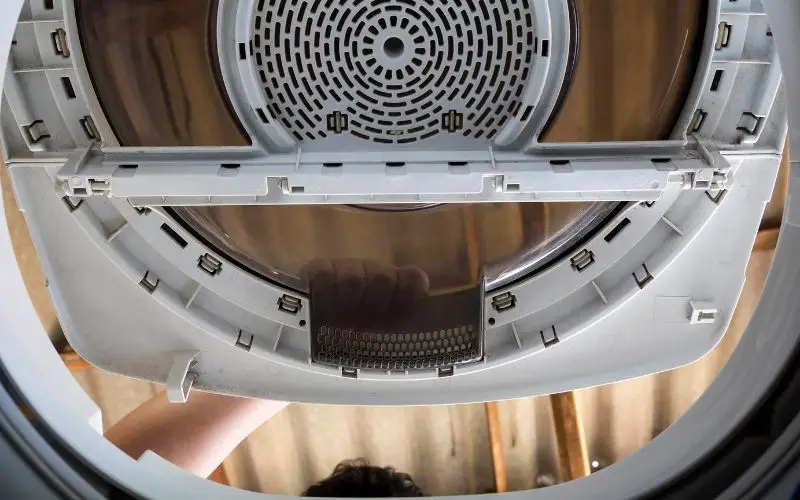
The lint filter traps the fluff that comes off your clothes. It is usually inside the door opening, or at the bottom of the door frame. A blocked filter stops warm, damp air from leaving the drum. Your clothes stay damp, the cycle takes longer and the machine works harder.
To clean it, open the door and slide the filter out. Roll the fluff off the mesh with your fingers, and put the filter back until it clicks into place. It takes about ten seconds, and it is one of the best ways to reduce the risk of a fire.
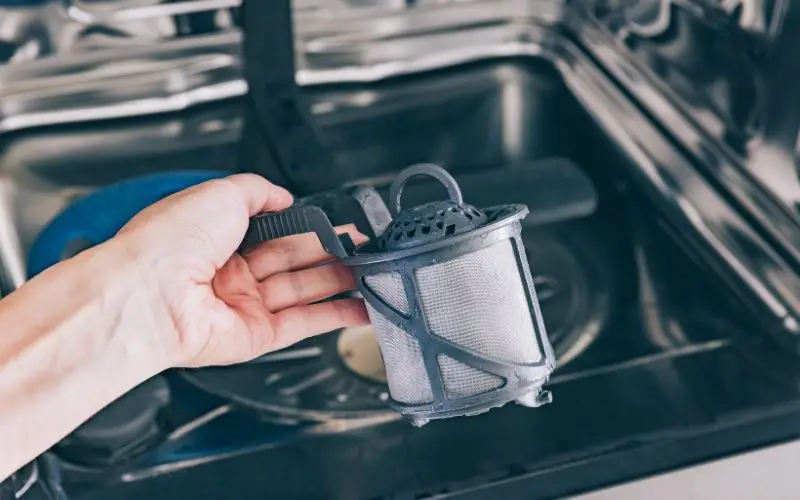
Fabric softener and dryer sheets can leave a thin, waxy film on the mesh that you cannot see, and it restricts the airflow just like fluff does. Wash the filter in warm, soapy water every month or so, brush it gently with a soft brush, and let it dry fully before you put it back. If your dryer is showing a filter warning even after you clean it, our guide on why your tumble dryer is showing a filter warning explains the other possible causes.
Empty the Water Tank After Every Load
Condenser dryers collect the water from your clothes in a removable tank, usually in the top or bottom of the machine. When the tank is full, the dryer may stop, and a warning light may come on. Empty it after every load, and then put it back firmly.
Pour the water down the sink. Do not drink it, and do not use it for plants or in a steam iron, unless your manual says it is safe, because it can contain lint and detergent residue.
Clean the Condenser or Heat Exchanger Monthly
Condenser dryers cool the hot, damp air using a heat exchanger, often called the condenser. Fine fluff and detergent residue collect between its thin fins and block the airflow. When this happens, the dryer takes much longer to dry, and in some cases, it may overheat and trip a safety device, so it blows cold air.
Check your manual first, because different dryers work differently. On many condenser dryers, you can clean it as follows. Unplug the dryer. Open the small flap at the bottom front, release the locking catches and slide the condenser out carefully. Rinse it under lukewarm running water, from the back to the front, until the water runs clear, and let it dry on a towel before you put it back. Do not use stiff brushes or sharp tools, because the metal fins are thin and bend easily.
Heat pump dryers are different. Many have a heat exchanger that should not be washed under the tap, and some have a filter in the lower front that you clean by hand or with a vacuum. Always follow the manual for your model.
If the dryer is still not drying properly after a clean, our guide on why your tumble dryer is not heating explains what else could be wrong.
Clean the Moisture Sensor Strips
Inside the drum, near the door opening, there are two thin metal strips. They measure how damp your clothes are during the cycle. Over time, detergent and fabric softener leave a film on them, and the sensors stop reading properly. The dryer may then stop after only ten minutes while your clothes are still damp, or it may keep running when the clothes are already dry.
Once a month, wipe the strips with a soft cloth dampened with a little white vinegar and water, or as your manual recommends, and dry them with a clean cloth.
Check the Vent Hose Twice a Year
Vented dryers blow warm, damp air out through a hose, and lint can build up inside the hose and at the outside vent. Unplug the dryer, pull it away from the wall carefully and disconnect the hose. Shake out any loose fluff, vacuum the inside of the hose and check that the outside vent is clear of leaves and dirt. A blocked vent hose is a serious fire risk, so keep the air path clear.
Warning Signs Your Dryer Needs Cleaning
Look out for these signs. Clothes are still damp after a full cycle, or the cycle is taking much longer than usual. The outside of the dryer feels very hot. There is a musty or damp smell in the room, or in the drum. The dryer makes a high-pitched noise. An error code or warning light appears. Codes vary by brand and model, so check your manual for what yours means.
If you smell burning: Stop the cycle straight away, switch the dryer off at the wall socket and keep the door closed. Do not restart it. If you see smoke or flames, leave the room and call 999.
Frequently Asked Questions
What happens if I never clean my tumble dryer?
The dryer takes longer, uses more electricity and can overheat. Fluff that builds up near the heater can catch fire. Regular cleaning is one of the simplest ways to stay safe.
Can I wash the condenser in the dishwasher?
No. The heat and detergent can warp the plastic and damage the fins. Rinse it by hand under lukewarm water, and follow your manual.
Why does my tumble dryer smell musty?
It is usually caused by damp lint and moisture in the filter, condenser or drum. Clean the filter and condenser, wipe the drum with a damp cloth and leave the door open after use, so that air can circulate.
Does a dirty filter increase my energy bills?
It can. A blocked filter restricts airflow, so the dryer has to run for longer and use more energy to dry the same load.
Can I use the dryer without the condenser?
No. Without it, the machine cannot cool and collect the damp air properly, and it can overheat and be damaged.
Need Help With a Slow or Faulty Tumble Dryer?
Regular cleaning keeps your dryer fast, efficient and safer. But if the dryer still takes too long, blows cold air or makes a loud noise after you have cleaned every filter, there may be a faulty part. Our trained and insured engineers cover all London boroughs and carry parts for Bosch, Beko, Hotpoint, Indesit, Samsung and Miele dryers, with a guarantee on parts and labour.
Book a visit for Tumble Dryer Repair in London and get honest advice and clear pricing. Contact London Appliance Repair now.