

An induction hob looks sleek and is easy to wipe, but it is not indestructible. The glass surface scratches, stains and can even pit if the wrong cleaner or tool is used. Spills that bake on, limescale marks and greasy fingerprints are the most common complaints.
This guide explains how to clean an induction hob step by step, how to deal with stubborn marks, what you should never use, and when a problem is no longer about cleaning.
Switch the hob off and let it cool. Wipe the surface with a soft cloth, warm water and a little washing-up liquid, then dry it with a clean cloth. For burnt-on food, soften it with a warm, soapy cloth and lift it with a hob scraper held at a shallow angle. Avoid abrasive pads, bleach and oven cleaners. Always check your manual, because manufacturers give slightly different advice.
Why Cleaning an Induction Hob is Different
On a gas or traditional electric hob, the heat comes from the burner or element, so spills burn directly onto a very hot surface. An induction hob heats the pan itself using a magnetic field, so the glass only warms up from the heat of the pan sitting on it.
This means spills usually bake on less than they would elsewhere. But once sugar, milk or fat has burnt onto the glass, it can be hard to remove, and the wrong method can scratch it. Because the surface is also home to touch controls and sensors, you should not use too much water or harsh chemicals around the edges and control panel.
What You Need
- A soft microfibre cloth, and a second clean one for drying
- Warm water and washing-up liquid
- A hob scraper designed for glass ceramic surfaces
- A dedicated ceramic or induction hob cleaner (optional)
- White vinegar for limescale (if your manual allows it)
- Kitchen roll
Step-by-Step: How to Clean an Induction Hob
Step 1: Switch Off and Let It Cool
Make sure every zone is switched off. Many hobs show an “H” or a similar symbol while the surface is still warm, so wait until it disappears. If your hob has a control lock or child lock, turn it on before you start so a stray touch does not switch a zone on while you wipe.
Step 2: Remove Loose Debris
Wipe away crumbs and dry food with a dry cloth or kitchen roll. Rubbing grit across the glass can leave fine scratches, so lift the debris rather than dragging it.
Step 3: Wash With Warm Soapy Water
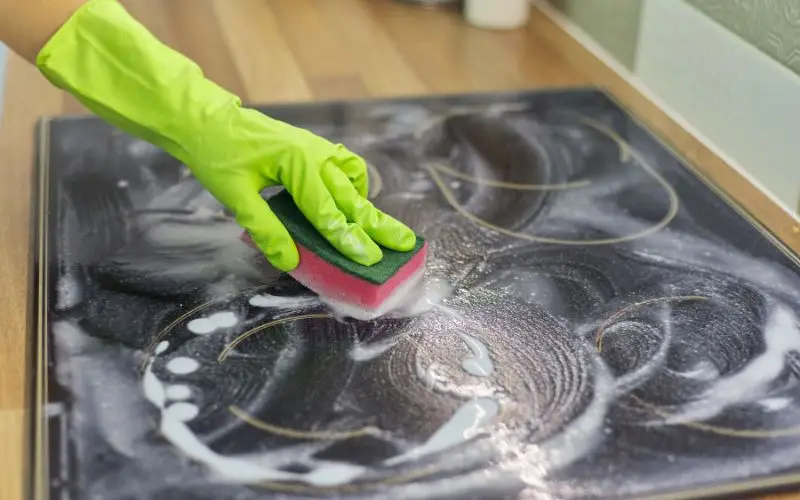
Dip the microfibre cloth in warm water with a little washing-up liquid. Wring it out well so it is damp, not dripping. Wipe the whole surface, including the edges and the area between zones.
Step 4: Rinse and Dry
Wipe again with a cloth dampened in clean water to remove soap, which can leave a film. Then dry and buff with a clean, dry cloth. Drying matters on an induction hob because it prevents streaks and keeps moisture out of the edges and controls.
Step 5: Clean the Control Panel Carefully
Wipe the touch controls with a barely damp cloth, then dry them straight away. Never spray cleaner directly onto the hob. Spray it onto the cloth first, so liquid does not run into the controls or the gaps around the frame.
How to Remove Burnt-On Food and Stubborn Stains
Burnt-on spills
- Let the hob cool completely.
- Lay a warm, soapy cloth over the stain for a few minutes to soften it.
- Hold a hob scraper at a shallow angle, about 30 degrees, and gently push the residue off in one direction. Do not use force or hold it upright.
- Apply a little ceramic hob cleaner, rub gently with a cloth, then rinse and dry.
Melted sugar, plastic or foil
These can damage the glass if left. Many manufacturers advise removing them immediately, even while the surface is still warm. Switch the hob off, protect your hand with an oven glove, and scrape the residue away with a hob scraper. Clean the rest once the hob has cooled. Check your manual, as advice can differ, and if the glass is already pitted or marked, that damage cannot be cleaned away.
Limescale and water marks
London has hard water, so white rings and cloudy marks are common where water has boiled over or dripped. Wipe the area with a cloth dampened with a little diluted white vinegar, if your manual allows it, then rinse well and dry. Do not leave vinegar to sit on the frame, rubber seals or controls.
Greasy film
A light layer of cooking grease builds up over time. Warm water with washing-up liquid usually removes it. For a heavier film, use a hob cleaner made for glass ceramic.
What Not to Use on an Induction Hob
- Abrasive pads, steel wool and scouring powders. They scratch the glass.
- Oven cleaner, bleach and strong chemicals. They can stain the surface and damage the printing and controls.
- Knives, metal scrapers and sharp tools. Only use a proper hob scraper.
- Steam cleaners and soaking wet cloths. Water can get into the edges and controls.
- Dirty cloths and dirty pans. Grit on the cloth or on a pan base can scratch the surface.
How Often Should You Clean an Induction Hob?
- After every use: wipe off spills and splashes once the surface is cool.
- Weekly: do a full clean with warm soapy water, then dry and buff.
- When needed: treat burnt-on marks and limescale as soon as you notice them. Fresh marks are much easier to remove.
To help avoid scratches, lift pans rather than sliding them, and keep the bottoms of your pans clean and smooth.
When It is Not a Cleaning Problem
Cleaning solves marks, but it cannot fix faults. Stop using the hob and get it checked if you notice any of the following:
- A crack or chip in the glass. Switch the hob off at the wall or isolator and do not use it. A crack can let liquid reach the electrical parts underneath.
- A cooking zone that has stopped working. If one zone no longer heats, our guide on why one ring on an electric hob is not working explains the common causes.
- An error code that keeps returning. Codes differ between brands, so check your manual first.
- A burning smell, buzzing or sparking.
- The hob tripping your fuse board.
A cooling fan that keeps running for a short while after you switch the hob off is normal on many induction hobs. It is there to protect the electronics.
Frequently Asked Questions
Can I use vinegar to clean an induction hob?
Diluted white vinegar can help with limescale on the glass, but check your manual first. Keep it away from the frame, seals and controls, and rinse and dry the surface afterwards.
Can I use a razor scraper on an induction hob?
A scraper designed for glass ceramic hobs is generally safe when used correctly, at a shallow angle and with light pressure. Never use a kitchen knife or a worn blade.
Why does my induction hob have white marks on it?
They are usually limescale from hard water or residue from cleaning products. Clean the area with a little diluted vinegar if your manual allows it, rinse well and dry.
Can I clean the hob while it is warm?
Wait until it has cooled, except for sugar, plastic or foil that has melted onto it. Those should be removed straight away with care, following your manufacturer’s advice.
Will cleaning damage the touch controls?
Not if you use a barely damp cloth and dry them afterwards. Do not spray liquid directly onto the panel.
Can scratches on an induction hob be removed?
Surface marks and residue can be cleaned off, but real scratches in the glass cannot be polished out at home. Deep scratches or cracks may mean the glass needs replacing.
Still Having Trouble With Your Hob?
If you have cleaned the hob properly and it still will not heat, shows an error code, or the glass is cracked, there may be a fault that cleaning cannot fix. Book a visit for hob repair in London, and our engineer will diagnose the problem and explain your options before any work begins.