




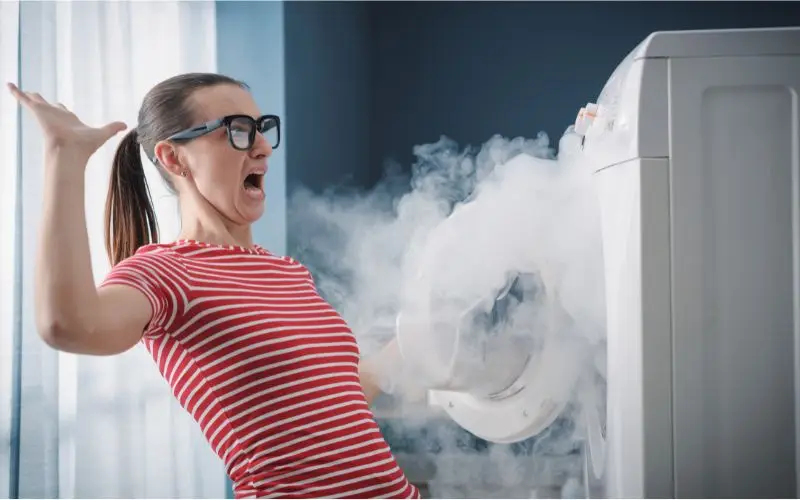
Is your washer dryer too hot to touch? Do your clothes come out scorching, or does the machine stop in the middle of a cycle? Overheating is a serious problem. It can damage your clothes, harm the parts inside the machine and, in rare cases, create a fire risk.
Many London homes are small, and washer dryers are often fitted inside kitchen cupboards, where heat can build up quickly. Some causes are simple to fix yourself. Others need an engineer. This guide covers the six most common causes and what to do about each one.
If you smell burning or see smoke: Stop the machine, switch it off at the wall socket if it is safe to do so, and keep the door closed. Do not restart it. If there are flames or heavy smoke, leave the area and call 999.
The most common cause of a washer dryer overheating is blocked airflow, usually from fluff in the condenser, filter or air path. Other causes include overloading, poor ventilation around the machine, a drainage or water supply problem, a faulty sensor and a failing heater. Clean what you safely can, and call an engineer if the problem continues.
1. A Blocked Condenser Unit or Air Path
Most washer dryers in UK homes are condenser type. They dry clothes by cooling the warm, damp air and collecting the water, which is then pumped away. Over time, fluff and lint build up in the condenser and in the air ducts, and detergent residue can make the fluff stick. Air cannot flow, and the heat stays trapped inside.
What you can do:
- Clean the lint filter after every dry cycle.
- Check your manual to see whether your machine has a removable condenser. Many washer dryers do not, and have a condenser built into the machine.
- If it is removable, rinse it under lukewarm tap water, and let it drain and dry before refitting.
- Wipe the door seal and the area around the door to remove fluff.
When to call an engineer: Fluff can build up deep inside the ducts and fan housing, where you cannot reach. An engineer can open the machine and clear it safely. If your machine shows a filter warning, our guide on why your tumble dryer is showing a filter warning explains the same airflow problems in more detail.
2. A Faulty Thermostat or Temperature Sensor
Your machine uses sensors, such as thermostats and thermistors, to measure the temperature. They tell the machine when to switch the heater off. If a sensor fails, the heater can stay on too long, and the drum gets far too hot.
When a sensor fault is detected, many machines stop the cycle and may show an error code. Codes vary by brand and model, so check your manual to see what yours means.
Testing sensors needs a multimeter and some electrical knowledge. This is not a DIY job.
Safety warning: Never open electrical panels yourself. Mains electricity can kill. Always contact a qualified engineer for electrical faults.
3. Overloading the Drum
Washer dryers have two capacity limits: one for washing and a smaller one for drying. For example, a machine might wash 8 kg but dry only 5 kg. Wet clothes need room to tumble, and warm air needs space to move through the fabric.
If the drum is too full, air cannot circulate, and heat builds up. The clothes in the middle stay damp, and the machine runs longer and gets hotter.
What you can do:
- Check your manual for the drying capacity.
- As a general guide, many manufacturers recommend filling the drum about halfway for drying.
- Split large loads into two smaller ones.
- Avoid drying heavy items, such as towels, with thin garments.
4. Limescale and a Failing Heater
London has very hard water, and limescale builds up in washing machines over time. It mostly affects the element that heats the wash water, but it can contribute to heating faults, and a failing heater can also cause overheating or trip your fuse box.
You may see thick, white scale on the element if you can look inside, but you should not remove panels yourself. Use a suitable descaler as your manual recommends. If you notice a burning smell, or your machine trips the fuse box, switch it off and call an engineer.
5. Poor Ventilation Around the Machine
Washer dryers give off warm air and need space around them to stay cool. In small London flats, they are often built in under worktops or tucked inside cupboards.
If the machine has no room to breathe, the air around it stays hot, and the whole machine can feel hot to the touch. Over time, this can warp cupboard doors and shorten the life of the machine.
What you can do:
- Leave the gap around the machine that the manufacturer recommends.
- Open the cupboard door during a drying cycle.
- Keep dust from collecting behind and under the machine.
- Do not stack heavy boxes on top.
6. A Drainage or Cold Water Problem
Condenser washer dryers use cold water to cool the steam during drying, and a pump removes the water. If water cannot drain, or if the cold water supply is blocked, the machine cannot cool the air properly, and temperatures can rise.
Common causes are a kinked drain hose, a blocked pump filter and a partly closed or blocked cold water tap.
What you can do:
- Check behind the machine for a kinked or crushed hose.
- Make sure the cold water tap is fully open.
- Clean the pump filter. Our guide on how to clean a washing machine filter properly explains the steps. Switch off and unplug the machine first, and have towels ready for spilt water.
How to Prevent a Washer Dryer From Overheating
- Clean the lint filter after every dry cycle.
- Do not overload the drum.
- Leave space around the machine and keep the area dust-free.
- Descale the machine as the manual recommends, especially in a hard water area like London.
- Do not leave the machine running when nobody is home.
- Book a service if you notice longer drying times or hotter clothes than usual.
When Should You Call an Engineer?
Call an engineer if:
- The machine overheats after you have cleaned the filter and checked the airflow.
- You smell burning or see smoke.
- The machine trips your fuse box.
- An error code keeps coming back.
- Drying takes much longer than usual.
- The machine stops mid-cycle repeatedly.
An engineer can open the machine, clear internal blockages and test the sensors, heater and wiring safely.
Frequently Asked Questions
Is it dangerous if my washer dryer overheats?
It can be. Excessive heat can damage wire insulation and plastic parts, and in rare cases it can cause a fire. Stop the machine, switch it off at the wall socket if it is safe to do so and get it checked.
How often should I clean the lint filter?
After every dry cycle. Check the condenser, if your machine has a removable one, about once a month, or as the manual recommends.
Can hard water cause heating problems?
Yes. Limescale can build up on heating parts and cause faults. Descale as your manual recommends, and ask an engineer if you notice problems.
Why does the machine overheat only when drying?
Washing uses water, which helps keep parts cool. Drying depends on the heater, fan and airflow, so blocked airflow, a faulty fan or a sensor fault only shows up during drying.
Can I keep using a washer dryer that overheats?
It is best not to. Stop using the dry function until the cause is found and fixed.
Need Help With an Overheating Washer Dryer?
An overheating washer dryer will not fix itself. Leaving it can mean higher energy bills and bigger repairs. Our trained and insured engineers cover all London boroughs and work on all major brands, including Bosch, Beko, Hotpoint, Indesit and Samsung, with a guarantee on parts and labour.
If the machine is still too hot after the simple checks, book a visit for Washer Dryer Repair in London and get honest advice and clear pricing. Contact London Appliance Repair now.